The Protein Paradox: Why More Protein Isn’t Always Better
Sep 09, 2026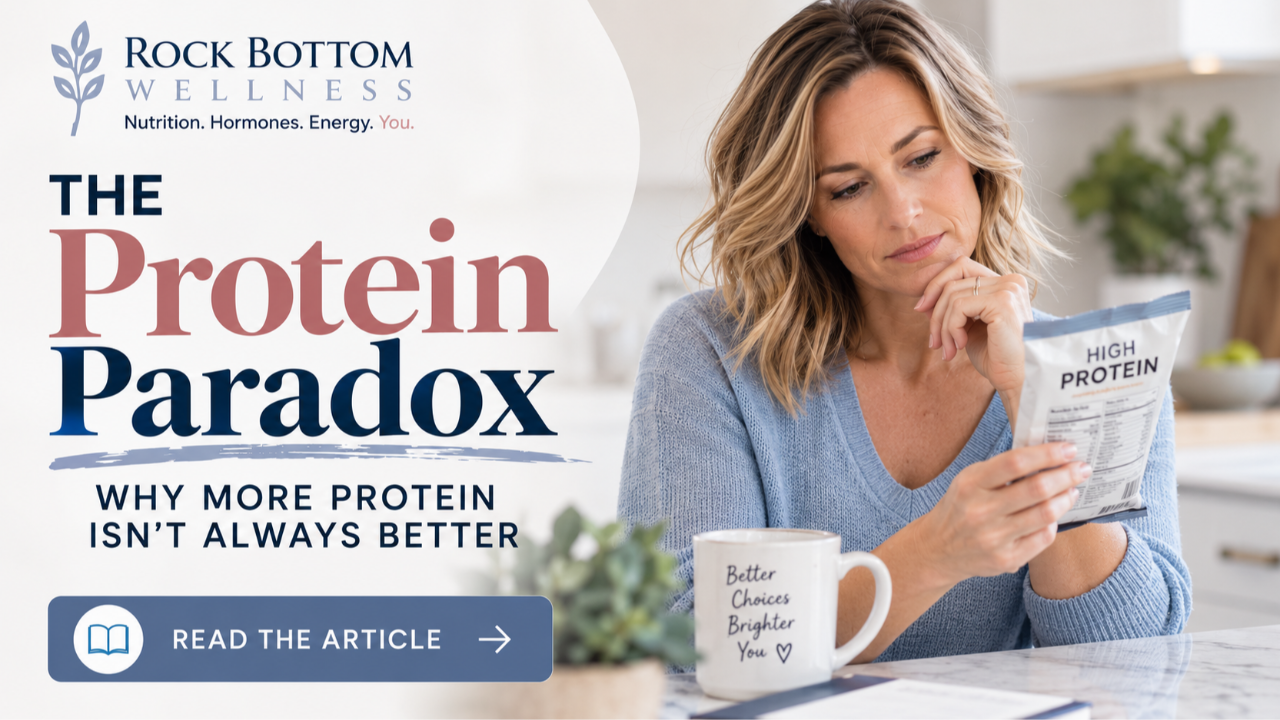
Protein is everywhere right now.
Want to lose weight? Eat more protein.
Want to build muscle? Eat more protein.
Hungry between meals? Grab something with protein.
Taking a GLP-1? You definitely need more protein.
And listen, I talk about protein all the time with my clients. It is incredibly important, especially if you’re trying to lose fat while maintaining muscle.
But I think we’ve taken a really good message and oversimplified it to the point that we’re creating a completely different problem.
We’re more obsessed with protein than we’ve probably ever been, but that doesn’t necessarily mean we’re eating healthier.
That’s what I call the protein paradox.
We’ve Entered the Protein Era
Nutrition has a way of swinging from one extreme to another.
Remember when we were supposed to avoid fat? Everything was low-fat or fat-free.
Then carbohydrates became the enemy.
Now we’re in the protein era.
Walk through the grocery store and look around. There’s protein cereal, protein chips, protein cookies, protein pancakes, protein muffins, protein ice cream, protein coffee, protein bars and, of course, protein shakes.
Even foods that naturally contain protein suddenly have HIGH PROTEIN splashed across the package.
We’ve created what I call a protein health halo.
If something has 15 or 20 grams of protein, we see that number and automatically think we’re making a healthy choice.
But I want you to start asking:
What else comes with that protein?
Because 20 grams of protein doesn’t erase everything else in that food.
Turn the Package Over
This is something I want you to actually do the next time you’re standing in the grocery store.
Don’t stop at the big protein number on the front.
Turn the package over.
Look at the added sugar. Look at the saturated fat, fiber, ingredients, calories and serving size. What vitamins and minerals are you getting? Is this food actually adding something valuable to your diet?
And probably most importantly, what is this food replacing?
Protein absolutely helps with satiety. It can help you get from breakfast to lunch without feeling like you need to snack an hour later. It also has a higher thermic effect than carbohydrates or fat, meaning your body uses more energy to digest and process it.
And adequate protein is incredibly important when you’re losing weight because we want to preserve lean tissue.
But protein still provides calories.
Imagine you hear that you should eat 120 grams of protein every day. You continue eating your regular meals, but now you add a protein shake, a protein bar, protein coffee, a protein snack and maybe even a protein dessert because you’re trying so hard to hit that number.
You may have just added several hundred calories to a diet that was already meeting your energy needs.
Then you’re wondering, I’m eating all this protein. Why am I not losing weight?
I’ve even had people tell me they’re gaining weight while doing this.
The answer isn’t necessarily to keep adding protein to what you’re already eating.
Sometimes we need to restructure what you’re eating so quality protein takes the place of foods that weren’t serving you as well.
That’s a very different strategy.
Protein Products and Quality Protein Aren’t the Same Thing
When I talk about protein with my clients, I’m looking at much more than the number on a nutrition label.
Where is that protein coming from?
What amino acids does it provide?
How well are you digesting it?
What other nutrients are coming along with it?
And what does the rest of your meal look like?
Twenty-five grams of protein from salmon gives your body a very different nutritional package than 25 grams from protein chips or some highly processed protein dessert.
Eggs provide protein along with choline and other vitamins and minerals.
Greek yogurt can give you protein and calcium.
Beans and lentils provide protein along with fiber, potassium, folate and other plant nutrients.
Fish, poultry, eggs, dairy and legumes aren't simply helping you hit a protein goal. They’re helping make the entire meal more nutrient-dense.
And that is what I care about.
This doesn’t mean I never recommend a protein shake or that you can’t have a protein bar.
I use convenient protein foods too. We have busy lives, and sometimes convenience matters.
But I want those foods to be tools.
I don’t want them to become the foundation of your diet.
If You’re Taking a GLP-1, This Matters Even More
Now we need to add another layer to this conversation.
GLP-1 medications can significantly reduce appetite and food noise. For someone who has spent years constantly thinking about food or struggling with intense hunger, that can feel incredibly freeing.
But when you dramatically reduce how much food you’re eating, you’re also reducing your opportunities to get protein, fiber, vitamins, minerals, essential fats and everything else your body needs.
This is why I tell my GLP-1 clients that they have less nutritional real estate.
If you can only eat a small amount of food, every bite needs to do more for you.
And simply telling someone on a GLP-1 to “eat more protein” isn’t enough.
I’ve seen this happen in my own practice. Someone hears me talking about the importance of protein, and the takeaway becomes, Okay, I’ll just drink three ready-made protein shakes every day.
That is not what I meant.
We have to look at the entire diet.
Are you eating enough overall?
Where is your protein coming from?
Are you getting fruits and vegetables?
What does your fiber intake look like?
Are you getting essential fatty acids?
What about calcium, iron, B vitamins, magnesium and potassium?
Are you drinking enough water?
Are you digesting your food well?
Are you constipated?
These things still matter, even when the scale is going down.
And Then There’s Muscle
This may be one of the most important parts of the entire protein conversation.
Eating protein alone doesn’t preserve your muscle.
Protein matters enormously, but your body also needs a reason to keep that muscle.
You have to use it.
Resistance training provides that signal.
The way I explain it is this:
Protein provides the building materials. Resistance training sends the construction order.
You want both.
If you’re losing a significant amount of weight, barely moving, not lifting anything challenging and relying on protein shakes to protect your muscle, that isn’t a complete muscle-preservation plan.
This is also why I don’t want you obsessed with making the number on the scale drop as quickly as possible.
What is that weight loss actually made up of?
Are you primarily losing body fat?
How much muscle are you keeping?
What is happening to your strength?
How do you feel?
The goal should be better body composition and metabolic health, not simply becoming a smaller version of yourself.
So How Much Protein Do You Actually Need?
This is where social media makes nutrition sound much simpler than it actually is.
You’ve probably heard:
Eat your body weight in grams.
Or maybe you’ve been told you need 100 grams. Or 150. Or 200.
I give general protein recommendations when I’m teaching too, because sometimes we need a starting point.
But there is no perfect protein number that applies to every person.
Your needs can change based on your body size, body composition, age, activity level, whether you’re losing weight, whether you’re resistance training, your medical history, hormone health and even how well you digest protein.
That’s why I don’t want you chasing the highest number you can possibly reach.
More is not automatically better.
We’re looking for an appropriate amount for you and what you’re trying to accomplish.
We’re not trying to win a protein-eating contest.
Build Your Meal Around Protein Instead
Here’s the shift I’d rather have you make.
Instead of spending the day asking:
How can I get more protein?
Start asking:
How can I build a nutrient-dense meal with quality protein as the main attraction?
Maybe breakfast is eggs with vegetables and berries.
Maybe it’s Greek yogurt with berries, chia seeds and walnuts.
Lunch could be chicken with roasted vegetables and a potato.
Dinner might be salmon with quinoa and asparagus, or a lentil bowl with vegetables and a quality fat.
Now you’re getting protein, but you’re also getting fiber, vitamins, minerals, healthy fats and plant nutrients.
That’s very different from constructing your entire diet around products that say “20 grams of protein” on the package.
Does every meal have to look like this?
No.
You’re going to eat out. You’re going to have busy days. Sometimes you’ll grab the protein shake because it’s what works that morning.
That’s normal.
I just don't want convenience foods to slowly become your entire diet because they happen to have protein added to them.
The Protein Number Isn’t the Whole Story
So this is the paradox.
We’re talking about protein more than ever, but that doesn’t necessarily mean we’re eating better.
You can eat a high-protein diet and still be low in fiber and micronutrients.
You can eat a food with plenty of protein that is still highly processed and calorie-dense.
You can hit your protein goal and still lose muscle if you’re losing weight rapidly and not challenging your muscles.
And yes, you can eat more calories than your body needs while eating a high-protein diet.
Protein matters.
It matters a lot.
But protein isn’t the whole diet.
Especially if you’re taking a GLP-1, I don't want the question to be:
How little can I eat and still get my protein?
I'd rather you ask:
How can I use this time to improve my body composition and metabolic health while still giving my body what it needs?
Get enough protein. Choose quality sources most of the time. Eat your fiber. Get your vitamins and minerals. Hydrate. And please, use your muscles.
Because successful weight loss isn't only about the pounds that disappear.
It's about what you're losing, what you're keeping, and what your health looks like when you get there.
And the next time you see “30 grams of protein” splashed across the front of a package?
Turn it over.
Protein is a nutrient, not a permission slip.
If You’re Using a GLP-1, Protein Is Only Part of the Plan
If you’re taking a GLP-1 or thinking about starting one, I want you to have a strategy that goes beyond eating less and drinking more protein shakes.
That’s exactly why I created my GLP-1 Fat Loss Success Blueprint.
It’s a 90-day program that walks you through what to do before, during and after GLP-1 use so you understand how to nourish your body when your appetite changes, protect your muscle, support your metabolism and prepare for long-term maintenance.
And if you want more individualized support or need access to a prescriber, I have an option for that as well.
A GLP-1 can be a very effective tool.
But it shouldn't have to be your entire plan.